



734-361-3948

What is Sleep Apnea?

Sleep apnea is a common sleep disorder where breathing repeatedly stops or becomes restricted during sleep. These interruptions can prevent your body from getting the oxygen it needs and can significantly impact your quality of sleep and overall health.

Many people with sleep apnea are unaware they have it.

30 million U.S. adults have obstructive sleep apnea, but an estimated 80% of these cases are undiagnosed. While loud snoring is a common sign, sleep apnea CAN also occur in people who do not snore. The condition can affect anyone, regardless of age or body type.

Contact USLearn about sleep Apnea

What Are The Main Types of Sleep Apnea?

The three types of sleep apnea include:
SIGNS & SYMPTOMS OF

SLEEP APNEA

DAY
NIGHT
Morning Headaches
Loud or Frequent Snoring
Excessive Daytime Tiredness  
Pauses in Breathing Noticed by a Partner
Difficulty Concentrating
Gasping, Choking, or Coughing During Sleep
Brain Fog or Memory Problems
Restless Sleep
Irritability or Mood Changes  
Frequent Nighttime Awakenings  
Feeling Unrefreshed Despite 8+ Hours   
Teeth Grinding (Bruxism)
Decreased Energy or Motivation
Dry Mouth Upon Waking
Night Sweats
Frequent Nightime Urination  
DAY
Morning Headaches
Excessive Daytime Tiredness  
Difficulty Concentrating
Brain Fog or Memory Problems
Irritability or Mood Changes  
Feeling Unrefreshed Despite 8+ Hours   
Decreased Energy or Motivation
NIGHT
Loud or Frequent Snoring
Pauses in Breathing Noticed by a Partner
Gasping, choking, or Coughing During Sleep  
Restless Sleep
Frequent Nighttime Awakenings  
Teeth Grinding (Bruxism)
Dry Mouth Upon Waking
Night Sweats
Frequent Nightime Urination  

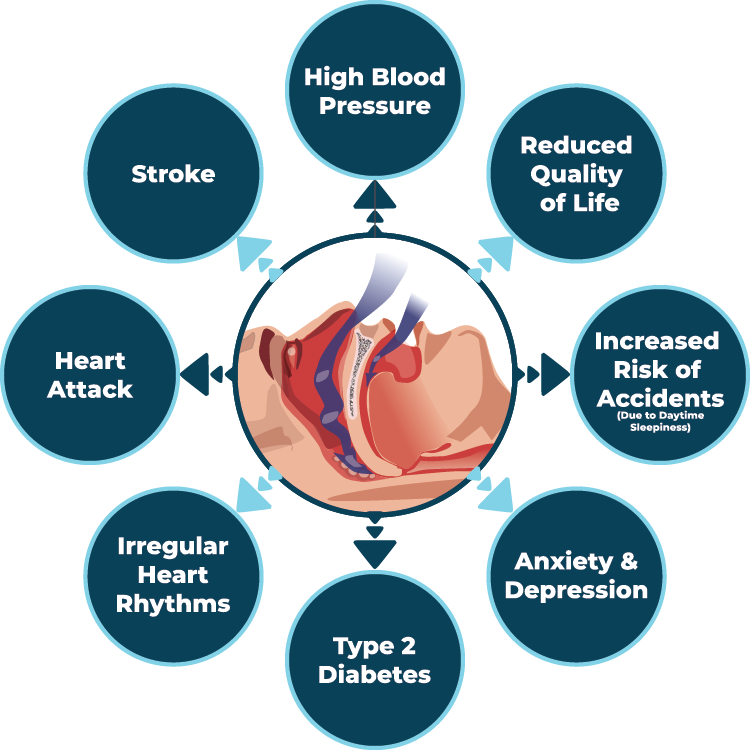
RISKS OF UNTREATED OSA:

When sleep apnea is left untreated, repeated drops in oxygen and disrupted sleep can place stress on the body.

Sleep Apnea Is More Than Just a Sleep Issue—It Is a Health Issue.

Diagnosis: A proper diagnosis begins with a conversation about your symptoms, health history, and sleep concerns.

If sleep apnea is suspected, your physician or sleep provider may recommend a SLEEP STUDY. Sleep studies measure breathing patterns, oxygen levels, heart rate, and sleep quality to determine whether sleep apnea is present and how severe it may be.

Sleep Studies May be Performed: